Climate-Controlled Storage vs. Regular Storage—What’s the Real Difference?
When you start looking for storage units in Richmond, KY, one question almost always comes up: Do I need climate-controlled storage, or will a regular unit work just fine?
It is a fair question. And honestly, the answer depends on what you are storing and how long you plan to keep it there.
If you are trying to decide between climate controlled vs regular storage in Richmond KY, this decision matters more than you might think. The summers here get hot and humid. The winters bring cold snaps. That kind of weather can do real damage to certain items if they are sitting in a unit that has no temperature or humidity control.
This guide breaks it all down in plain English so you can make the right choice without second-guessing yourself.
What Is Regular Storage?
Regular storage is exactly what it sounds like. It is a basic storage unit — four walls, a door, and a lock. There is no heating, no cooling, and no humidity control inside.
These units are usually cheaper than climate controlled options. Many of them are drive-up units, which makes loading and unloading easy. You pull up, open the door, and put your stuff in.
Regular storage works great for items that are not sensitive to temperature or moisture. Things like lawn equipment, tires, outdoor furniture, and sports gear do just fine in these units.
The downside is simple. When it is 95 degrees outside in July, it is probably hotter inside that unit. When the humidity spikes, that moisture gets in too. For certain belongings, that is a problem.
Quick pros of regular storage:
- Lower monthly cost
- Easy drive-up access
- Good for durable, weather-resistant items
- Short-term storage needs
Cons to keep in mind:
- No protection from heat, cold, or moisture
- Not ideal for sensitive or valuable belongings
- Temperature inside can swing drastically with the seasons
What Is Climate Controlled Storage?
Climate controlled storage is a step up. These units are kept at a steady temperature year-round — typically somewhere between 55 and 80 degrees Fahrenheit. Many also control humidity levels inside, which is just as important as temperature.
These units are almost always located inside a building. That alone gives your belongings an extra layer of protection from the outside elements.
The air inside stays consistent. In summer, it does not turn into an oven. In winter, it does not freeze. And because humidity is controlled, you do not have to worry about moisture creeping in and causing mold, warping, or rust.
Yes, climate controlled units cost a bit more per month. But for the right items, that extra cost is absolutely worth it.
Quick pros of climate controlled storage:
- Steady temperature all year
- Humidity control reduces risk of damage
- Located inside buildings — added security and cleanliness
- Better for long-term storage
Cons to keep in mind:
- Higher monthly cost
- May not have drive-up access
- More than you need for basic, durable items
Key Differences at a Glance
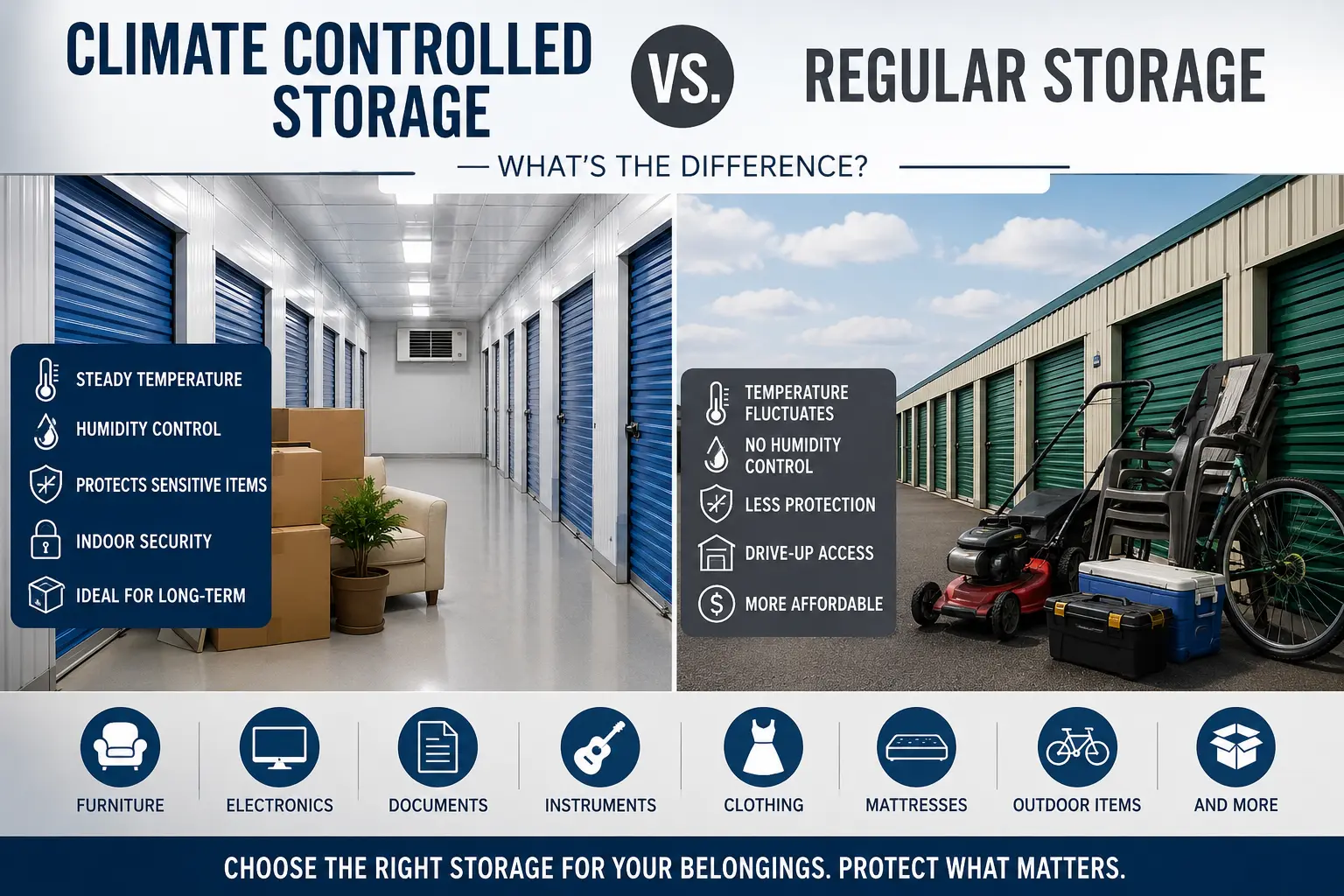
Understanding climate-controlled vs. regular storage in Richmond, KY, comes down to a few key factors—temperature, humidity, cost, and what you plan to store.
| Feature | Regular Storage | Climate-Controlled Storage |
| Temperature control | No | Yes (55-80°F) |
| Humidity control | No | Yes |
| Location | Often outdoor/drive-up | Usually inside a building |
| Cost | Lower | Slightly higher |
| Best for | Durable, short-term items | Sensitive or valuable items |
| Protection level | Basic | Enhanced |
What Should You Store in Climate Controlled Storage?
If any of the following items are going into your storage unit, climate controlled is the way to go.
Wood furniture — Wood expands and contracts with temperature changes. Over time, this causes cracking, warping, and splitting. A climate controlled unit keeps that from happening.
Electronics — Laptops, TVs, gaming consoles, and other electronics do not handle extreme heat or moisture well. The internal components can corrode or get damaged if exposed to humidity for extended periods.
Documents and important papers — Birth certificates, legal paperwork, old photos, and business records can yellow, curl, or stick together in humid conditions. A dry, stable environment keeps them in good shape.
Antiques and collectibles — Whether it is old coins, vintage furniture, or heirlooms, these items often have both sentimental and monetary value. Protecting them with a climate controlled unit is a smart move.
Musical instruments — Guitars, pianos, violins — all of these are highly sensitive to humidity and temperature. Even small changes can knock them out of tune or cause permanent structural damage.
Artwork — Canvas paintings, framed prints, and sculptures can fade, warp, or crack when exposed to extreme temperatures.
Clothing and textiles — Fine fabrics, wedding dresses, and delicate garments can get musty or develop mold stains in a humid storage unit.
Mattresses — Left in a hot, humid unit, a mattress can develop mold or mildew inside the foam. A climate controlled space keeps it fresh.
The general rule is this: if you would not leave it in a hot car for a summer, do not put it in a regular storage unit.
What Can Go in Regular Storage?
Not everything needs the extra protection. Plenty of items do just fine in a standard unit.
Lawn mowers, rakes, shovels, and other garden tools can handle temperature changes without any issues. Vehicles, motorcycles, and ATVs that are properly covered do well in regular units too. Sports equipment like bicycles, kayaks, and camping gear is typically durable enough to handle the heat. Plastic bins, patio furniture, and basic household goods that are not sensitive to moisture are also good candidates for regular storage.
If you are storing something for just a few weeks or months and it is not fragile or valuable, a regular unit gets the job done at a lower price.
Is Climate Controlled Storage Worth the Extra Cost?
For the right items, absolutely yes.
Think about it this way. If a piece of furniture gets warped, a mattress develops mold, or a box of old family photos gets ruined—the cost to replace those things (or the fact that some of them cannot be replaced at all) far outweighs the few extra dollars a month for a climate-controlled unit.
In Richmond, Kentucky specifically, this matters. Summers here are hot and sticky. Humidity levels climb, especially from June through August. Winters can dip well below freezing. A regular storage unit in this climate is exposed to a wide temperature range throughout the year.
If you are planning to store your belongings for six months or longer, the investment in a climate controlled unit usually makes sense. For short-term storage of non-sensitive items, a regular unit works fine.
How to Choose the Right Storage in Richmond, KY
If you are still thinking about climate controlled vs regular storage in Richmond KY, these four questions will help you decide.
- What exactly am I storing? — Go through the list above and see if any of your items are sensitive to temperature or moisture.
- How long will my items be in storage? — A few weeks is different from a year. Longer storage means more exposure to seasonal changes.
- What is my budget? — Climate controlled units cost more, but the price difference is often smaller than people expect. It is worth getting a quote.
- What is the condition of the items? — Older, antique, or sentimental items deserve the extra protection. New, durable items probably do not.
If you are still not sure, reach out to the team at Self Storage Richmond KY. We are happy to walk you through the options and help you find the right unit for your specific situation.
Frequently Asked Questions
Is climate controlled storage more expensive?
Yes, it typically costs more than a regular unit. However, the price difference varies. For many people in Richmond, KY, the extra monthly cost is worth it to protect valuable or sensitive belongings.
Does Richmond, KY weather make climate controlled storage necessary?
For sensitive items, yes. Richmond experiences hot, humid summers and cold winters. That kind of temperature range can damage wood furniture, electronics, documents, and other items over time.
Can I store a mattress in regular storage?
You can, but it comes with risks. Heat and humidity can cause mold or mildew to develop inside the mattress, especially over several months. A climate controlled unit is a safer choice for mattresses.
How do I know which unit I need?
Think about what you are storing and how long it will be there. Sensitive, valuable, or sentimental items—go climate controlled. Durable, weather-resistant items for short-term storage — a regular unit works fine.
What temperature is climate-controlled storage kept at?
Most climate-controlled units are maintained between 55 and 80 degrees Fahrenheit year-round. Some facilities also monitor and control humidity levels.
The Bottom Line
Both types of storage have their place. Regular units are affordable and practical for items that do not need extra protection. Climate-controlled units give you peace of mind when storing things that matter—whether that is financially, sentimentally, or both.
If you are still not sure about climate-controlled vs. regular storage in Richmond, KY, we are here to help you find the right unit. Browse our available units, or give us a call, and we will point you in the right direction.
Your belongings deserve to come out of storage in the same condition they went in.